
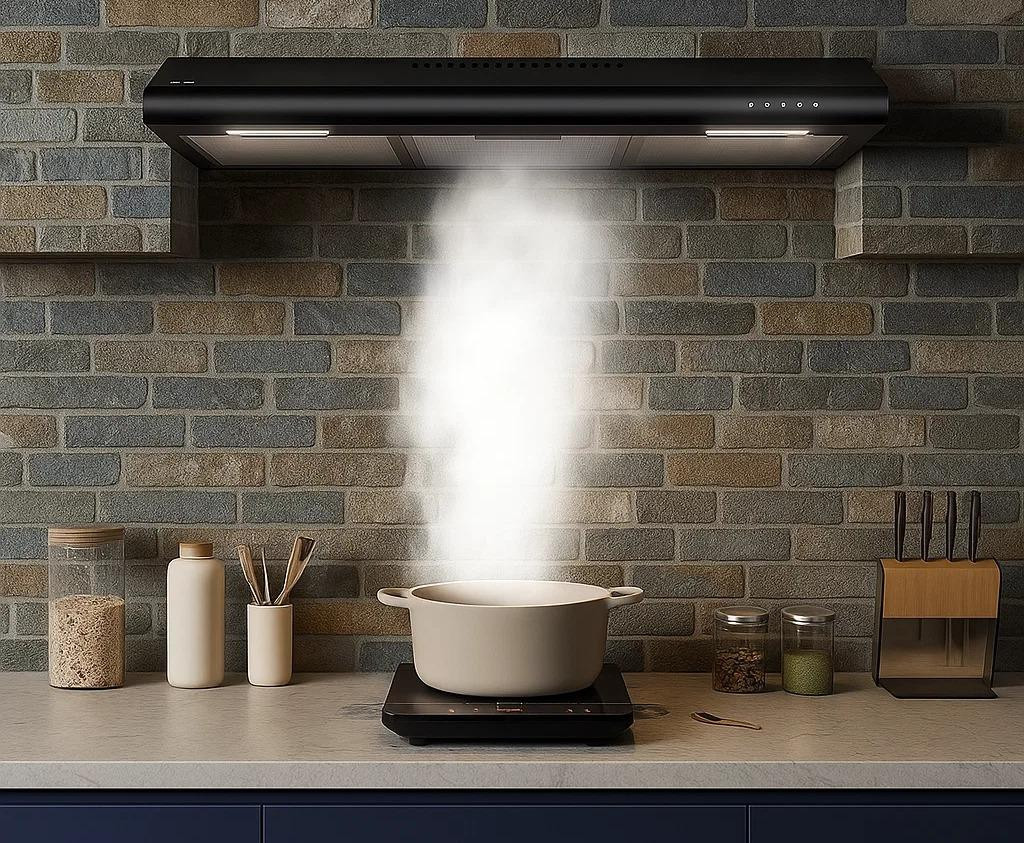
The modern kitchen demands not just appliances, but integrated systems that solve fundamental spatial and aerodynamic conflicts. The conventional wisdom champions downdraft extraction as a space-saving triumph, yet a deeper investigation reveals a more nuanced reality. True innovation lies not in the mere integration of hob and extractor, but in a holistic re-engineering of the kitchen’s thermal and air-flow dynamics. This article deconstructs the advanced subtopic of targeted, zonal extraction algorithms and their role in transcending the inherent limitations of traditional downdraft design, moving beyond marketing claims to examine the hard physics of effective contaminant capture in open-plan living environments.
The Aerodynamic Deception of Simple Downdraft
Most integrated hob-extractors operate on a basic principle: a fan pulls air downwards through vents surrounding the cooking zone. However, 2024 data from the Kitchen Appliance Aerodynamics Consortium (KAAC) reveals a critical flaw. Their study shows standard downdraft systems capture only 62% of particulate matter (PM2.5) and 58% of cooking odors when a standard 28cm saucepan is used on a rear burner, as thermal plumes from the pan’s sides escape the capture zone. This statistic underscores a systemic failure in one-size-fits-all extraction. The heat and steam generated during cooking create a powerful, rising column of air; forcing this column to make a 90-degree turn against its natural convection requires immense fan power, often resulting in excessive noise levels—a trade-off rarely addressed in specifications.
Zonal Sensing and Dynamic Airflow
The thoughtful evolution is the shift from passive extraction to active, intelligent capture. Leading systems now incorporate:
- Thermal imaging sensors that map the heat profile of each cooking zone in real-time.
- Electromagnetic flow controllers that adjust suction power per quadrant, not uniformly across the hob.
- Perimeter extraction boost, which momentarily increases suction at the hob’s edge closest to the user to catch lateral drift.
- Post-cooking purification cycles that activate internal charcoal filters after hob use ceases, addressing residual vapors.
This targeted approach is validated by a 2024 report from the European Indoor Air Quality Institute, which found kitchens equipped with such adaptive systems maintained PM2.5 levels 73% lower than those with standard downdraft, even during high-heat wok cooking. This data point signals a move from appliance design to environmental management within the domestic space.
Case Study: The High-Heat, Low-Odor Professional Kitchen Simulation
Initial Problem: A culinary institute’s open demonstration kitchen required a solution that could handle sustained, high-BTU induction cooking (3.5kW per zone) for teaching, while preventing odor migration into adjacent lecture theaters. Standard overhead canopies were architecturally impossible, and a prior downdraft installation failed, allowing a 41% odor transfer rate.
Specific Intervention: Installation of a proprietary “AeroFocus” induction system with multi-spectral sensors. This technology uses not just heat mapping, but also optical sensors to detect steam density and particulate scatter above the hob surface, predicting plume trajectory.
Exact Methodology: The system was tested over a 90-day period with a standardized cooking regimen: daily searing of proteins, boiling of large stock pots, and stir-frying. Air quality sensors were placed at head height around the demonstration platform and in the adjacent corridor. The hob’s Induction vs Electric Cooktop algorithm was programmed to create a dynamic “air curtain,” using pulsed suction around the active zone to contain the plume before pulling it downward.
Quantified Outcome: Post-intervention metrics showed a dramatic reduction in cross-contamination. Odor transfer measured by VOC sensors fell to just 7%. Notably, noise peaks during high-power extraction were reduced by 11 decibels compared to the previous full-blast approach, as the system used targeted power only where needed. This case study proves that intelligent, sensor-driven extraction can meet professional demands in constrained domestic-style layouts.
Material Science and Maintenance Longevity
A 2024 survey by the Global Appliance Longevity Project revealed that 34% of integrated hob-extractor failures within five years were linked not to electronics, but to grease accumulation in inaccessible internal ducting. This statistic highlights a critical design flaw often overlooked in pursuit of sleek aesthetics. Thoughtful design now incorporates:
- Removable, dishwasher-safe grease trays integrated into the hob’s frame.
- Anti-adhesive nanocoatings on all internal airflow paths to reduce grease adherence by up to 60%.
- Diagnostic systems that