
Introduction
Speed is a competitive edge. Own it. Your team stands on a busy floor as the line pauses, and the clock starts to bite. The robotics parts on that line look solid, but small mismatches stack up fast. One weak servo drive, one noisy power converter, one misaligned end-of-arm tooling bracket—and throughput drops. In many plants, downtime eats 5–15% of weekly output; even a 100 ms motion jitter can add minutes per shift. So, what should you change first to get real results? (Hint: it’s not only the robot.) You can push harder, but you need a smarter parts stack, tuned to the job and the data.
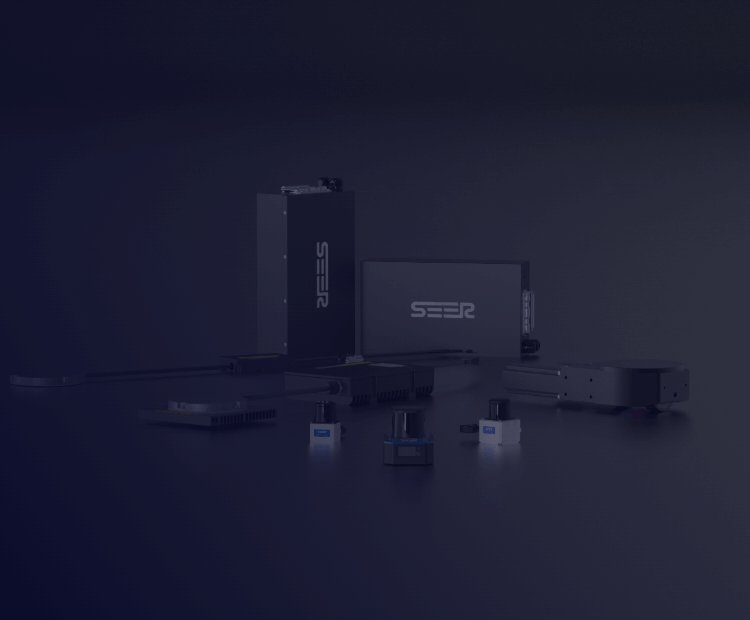
Here’s the drill: compare not just specs, but fit. Compare not just cost, but cycle time and maintenance. Compare not just single parts, but how the whole motion chain behaves under load—funny how that works, right? Ready to see where the gains hide? Let’s move to the real gaps you can fix next.
Hidden Friction: Where Traditional Choices Fail
Why does integration still break at scale?
Most buyers start with torque, payload, and catalog speed. When teams source industrial robot parts, they often trust spec sheets over system behavior. The gap shows up after install. Harmonic reducers look perfect on paper, but backlash tolerance under shock loads can drift. Encoders read clean in the lab, yet electrical noise in mixed-voltage cabinets skews counts. Fieldbus choices seem “standard,” but vendor quirks break determinism. Look, it’s simpler than you think: the part is fine; the stack and context are not. Think of the motion chain as one system: motor, drive, reducer, sensor, cables, and the controller’s timing window. If one link is sloppy, the cell hunts, overshoots, and stalls.
Here are the hidden pain points. First, integration latency: servo drives tuned for demo rigs choke when the safety PLC adds checks. Second, thermal creep: reducers warm up, grease thins, and path accuracy fades mid-shift. Third, power integrity: converters ride through micro-sags poorly, so robots fault during weld spatter or vision lamp spikes. Finally, edge computing nodes process vision and force data, but poor task scheduling collides with motion ticks. The result is “ghost downtime,” not a clear fault, just slow cycles. You see it as small delays, extra regrips, or a finicky pick that works in the morning and fails at noon—because the real constraint was never on the datasheet.
Next-Gen Principles and Practical Wins
What’s Next
To fix the drift between paper and plant, adopt new principles. Compare parts by system coherence, not isolated spec. Modular industrial robot parts with unified timing models let the drive, reducer, and encoder share a single jitter budget. That means predictable motion windows. Drives with adaptive notch filters mask resonance without killing speed. Power converters with fast ride-through protect against micro-outages. And edge computing nodes that schedule inferencing between motion ticks avoid control jitter. This is the new baseline: parts that talk in millisecond truth, not marketing decimals. It feels technical, yes, but the goal is simple—cut variation. Fewer surprises. Better takt. — and yes, that’s a win you can bank.

Evaluating options? Use a comparative lens you can measure on the floor, not just in a demo. First, timing integrity: demand a documented control-loop latency across the full stack (controller, fieldbus, servo drive, sensors). Second, load realism: require accuracy data after thermal soak and under shock profiles, not just at room temp. Third, recovery behavior: test how the cell handles a 50 ms power dip and a network retry without manual resets. These three metrics turn guesswork into uptime. Summing up, the old flaws were spec-first and context-later; the new path is stack-aware, data-timed, and recovery-proof. Keep the tone practical, compare like-for-like, and your next upgrade will trade noise for numbers, and numbers for output. For deeper, system-minded guidance grounded in real cells and peripherals, see SEER Robotics.