
The field of photonics has actually observed exceptional improvements, especially in the development of various modulators that play vital functions in countless optical applications. Amongst these, fiber acousto-optic modulators (AOMs) and their lots of variants, such as space AOMs and free-space AOMs, stand out because of their convenience and performance. An acousto-optic modulator utilizes sound waves to regulate the intensity, frequency, or phase of light going through a tool, providing an effective technique for pulse modulation. With the growing need for high-resolution and precision applications, these devices have come to be essential in areas like telecoms, clinical imaging, and clinical study.
These lasers create light with an extremely narrow spectral size, making them optimal for different complex applications, consisting of meaningful communication systems and high-resolution spectroscopy. This integration demonstrates the pattern towards increased compactness and efficacy in optical systems without sacrificing efficiency.
The energy of fiber optic delay lines can not be overstated, particularly in developing advanced optical systems that need accurate timing and synchronization. These delay lines harness the fundamental homes of optical fibers to take care of light signals successfully, allowing researchers and engineers to discover high-speed information transmission or elaborate timing trying outs minimal loss of fidelity. The electric optical fiber delay line functions as a central component in this context, assisting in the manipulation of light signals to suit details requirements.
Explore fiber acousto optic modulator the newest developments in photonics, concentrating on the vital duty of fiber acousto-optic modulators in boosting laser applications, telecoms, and accuracy optical systems for diverse sectors.
Modulators are crucial in laser systems, playing a crucial function in transforming continual wave results into pulse formats. Acousto-optic Q-switch modulators serve this exact function, enabling fast modulation of laser outputs, which results in high-peak power pulses.
Furthermore, the difference between acousto-optic buttons and modulators is an essential aspect of recognizing how these devices function in various situations. Acousto-optic buttons efficiently reroute light beam of lights, hence making it possible for different routing functionalities within optical systems. On the other hand, a modulator changes the light’s homes, straight impacting the light beam’s characteristics. This distinction delineates their particular roles in laser systems and highlights the diversity of applications each device accommodates.
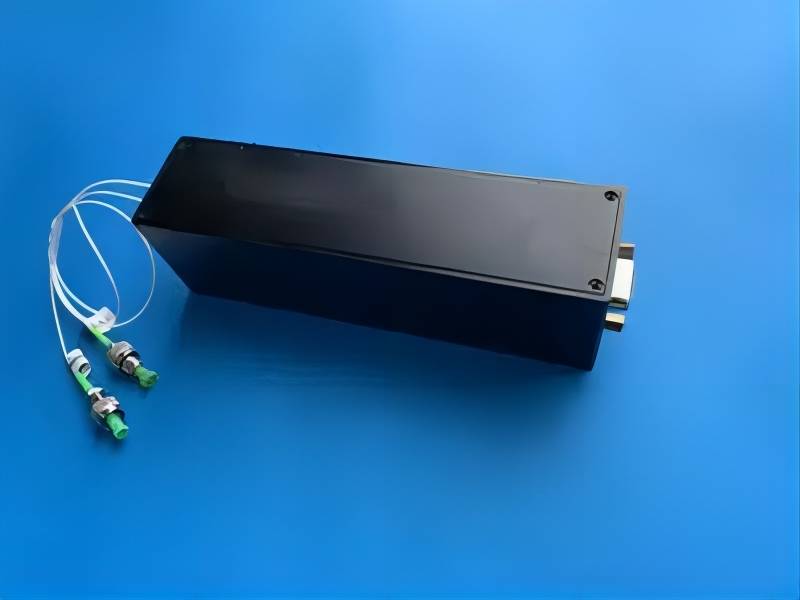
Acousto-optic devices have increasingly gotten traction out there, driven by the escalating demand for sophisticated optical technologies. The acousto-optic modulator market is observing substantial growth as a result of applications in telecoms, army systems, and industrial production. These devices are necessary for frequency moving, light beam guiding, and signal processing. As modern technology evolves, firms are establishing ingenious services to address the demands for miniaturization, enhanced performance, and cost-effectiveness.
Narrow linewidth fiber lasers display stable exhaust with minimal spectral spread, catering to applications in fiber-optic communications and sensing technologies. Coupling these fibers with advanced modulators enables scientists to check out new frontiers in optical interaction systems.
Acoustic optical deflectors contribute to the versatility of optical systems, supplying a method to control light dynamically and effectively by using acoustic waves as the controlling device. Such devices can be found in various applications, from laser scanning systems to innovative imaging techniques. By using the concepts of acousto-optics, these deflectors aid in achieving accurate and rapid changes in the beam of light’s trajectory without the requirement for complex mechanical components.
In exploring the types of pulse modulation, one understands the ins and outs and selection integral in the area. Pulse modulation methods, such as pulse-width modulation (PWM) and pulse-position modulation (PPM), permit control of light based upon emission to produce varying signal types. These methods cultivate improvements in electronic devices and photonics, from regulating laser outputs to boosting the efficiency of fiber optic systems.
Additional factor to consider of optical passive components discloses their indispensable function in enhancing system integrity. Their payment to overall system efficiency is essential, mainly when integrated with modulators and other dynamic optical devices.
The growing concentrate on space applications highlights the need for robust and dependable optical systems that can operate properly in severe conditions. Space acousto-optic modulators, in particular, fit the one-of-a-kind needs of space goals, where factors such as radiation direct exposure and temperature fluctuations can considerably impact capability. The development of space-grade acousto-optic devices ensures that interaction and information collection stay undisturbed in the rough settings of space.
Acousto-optic Q-switching stands for one of the most effective approaches of producing high-energy pulses, essential for applications ranging from laser marking to medical procedures. The modulation abilities fundamental in AOMs allow them to adjust to varying requirements, optimizing pulse duration and power output. They offer an ingenious path to raise laser applications across diverse areas.
As we dive additionally right into the future of photonics, it ends up being progressively clear that innovation in laser modulators and acousto-optic technologies is crucial. The innovations in modulator drivers improve the performance with which EOMs and aoms operate, enabling quicker and more trusted performance. The crossover between developments in modulation and the enhancing need for greater data transfer and lower latency in communication systems suggests a future rich with chances for strengthened optical communications.
Understanding the fundamental technicians that underpin acoustic optical modulators will certainly bring about superior style and efficiency enhancements as research continues to flourish. The expedition of new products, combinations, and techniques in locations like micro-nano construction will likely generate devices with also finer control and extended functional life times. These improvements not only guarantee enhanced capability for existing systems yet welcome completely new applications within emerging technologies in quantum computing, robotics, and progressed manufacturing.
In recap, the domain name of acousto-optic modulators and related fiber-optic innovations personifies quick progression and complexity, working as foundational components within numerous contemporary optical applications. With the expanding need for accuracy and high efficiency in different industries, the growth of acousto-optic devices, such as fiber AOMs, remains to advance, adapting to brand-new obstacles and chances. As designers and scientists press the borders of development, these devices will certainly continue to be central to forming the future of optical communication, laser applications, and beyond, heralding a brand-new era of technical advancement.